Newsletter Subscribe
Enter your email address below and subscribe to our newsletter

 ByJohn A
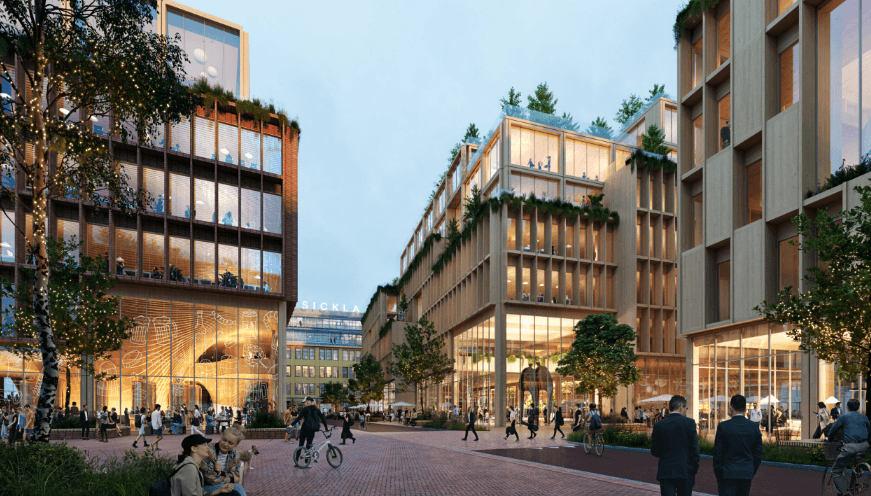
AI-enabled visualization translates concepts into photorealistic forms at speed, preserving dimensional fidelity while enabling parametric tweaks. Generative design evaluates performance criteria as objective variants, with transparent rationale guiding decisions. Real-time rendering and immersive walkthroughs offer stakeholders scalable perception of massing, circulation, and daylight behavior. Predictive analytics forecast feasibility, risk, and cost trajectories, informing schedule optimization and mitigation strategies. The result is accelerated iteration and clearer communication, yet key questions about implementation, data governance, and integration remain to be addressed.
AI accelerates architectural visualization by converting conceptual designs into immersive, photorealistic representations at speed. The process leverages parametric models and scalable render pipelines, enabling rapid iteration while preserving dimensional fidelity. Stakeholders evaluate spatial relationships and material behavior under varied lighting. Ethical considerations and data governance frame inputs, outputs, and provenance, ensuring compliant workflows, reproducibility, and accountable visualization practices across design teams.
From concept to communication, generative design functions as a structured workflow that translates abstract performance criteria into tangible design variants for evaluation.
The approach emphasizes design workflow rigor, enabling iterative pruning and selection.
Outputs support stakeholder engagement with objective metrics, reproducible parameters, and transparent rationale.
Architects assess variants for sustainability, constructability, and cost, aligning form with function while preserving creative freedom.
Real-time rendering and immersive walkthroughs provide stakeholders with immediate, spatially accurate experiences of proposed designs, enabling rapid assessment of scale, materials, lighting, and circulation.
The workflow leverages neural lighting to simulate perceptual brightness changes and material AI to optimize textures and surface responses in context.
This enables iterative feedback while preserving design intent, risk reduction, and disciplined aesthetic alignment with project goals.
The approach supports feasibility forecasting, calibrating designs to performance targets and cost constraints.
It also yields risk scoring, guiding mitigation strategies, schedule alignment, and resource allocation with transparent, auditable analytics for informed decision-making.
AI tools integrate with existing BIM workflows through standardized APIs, data schemas, and plugin layers, enabling seamless model synchronization, parameter mapping, and version control. Integration workflows emphasize interoperability, while data security governs access, encryption, and audit trails across platforms.
A data privacy shield is the lighthouse in data storms; data privacy concerns guide AI ethics, shaping governance, access controls, and audit trails. It delineates responsibilities, ensuring transparent, law-abiding AI-assisted designs within BIM workflows and project teams.
AI empathy is not exact; however, AI can approximate through emotional mapping, applying design translation from client clustering patterns to generate spatial and material cues that reflect inferred desires while preserving analytical, standards-driven rigor and architectural clarity.
AI decisions challenge traditional authorship, balancing creative ownership with shared inputs; objections about loss of control are mitigated by transparent attribution, lineage tracing, and authorship ethics. The result emphasizes precise workflows and freedom within collaborative, industry-standard frameworks.
Cost benchmarks for AI visualization adoption indicate tangible shading of visualization ROI, with methodical payback timelines, reduced iteration cycles, and scalable asset libraries; adoption latency reflects training demands, tooling maturity, and integration with existing BIM workflows.
See also: How AI Extracts Information From Documents
AI-enabled visualization elevates architectural practice by translating concepts into photorealistic, dimensionally faithful renderings and immersive walkthroughs. Generative design offers transparent variant evaluation tied to performance metrics, while predictive analytics forecast feasibility, cost, and schedule risks. An anticipated objection—that AI replaces human judgment—is countered: AI augments expertise, accelerating iteration and clarity, yet leaves design intent, ethical choices, and nuanced stakeholder engagement to experienced professionals. The result is faster, more informed decisions that align form, function, and sustainability with project goals.